You Gotta See What Sousse Hides in Its Souks
Walking through the medina of Sousse, Tunisia, I wasn’t just shopping—I was discovering stories. The scent of leather, the hum of bargaining, the flash of handwoven textiles—it’s more than commerce; it’s culture in motion. If you think shopping is just about buying, Sousse will change your mind. This coastal gem blends authenticity with charm, offering a sensory-rich experience few Mediterranean destinations still deliver. Here, every purchase carries meaning, every interaction tells a tale, and every alleyway opens into a living chapter of North African heritage. For women who travel to feel, to learn, and to bring back more than souvenirs, Sousse’s souks offer something rare: connection.
The Heartbeat of Sousse: Shopping as Cultural Immersion
Sousse’s medina is not merely a marketplace—it is a living archive of Tunisian life, where generations have traded goods, greetings, and traditions beneath sun-bleached archways and vaulted passageways. As a UNESCO World Heritage site, the old town preserves centuries of history in its stone walls and cobbled lanes, but it’s the people who breathe life into its legacy. Women in flowing robes pass baskets of figs; artisans tap tiny hammers against brass trays; children dart between stalls with loaves of warm bread tucked under their arms. To walk here is to step into a rhythm unchanged by time, where shopping is not transactional but relational.
Unlike sterile malls or crowded tourist bazaars filled with imported trinkets, Sousse’s souks thrive on authenticity. Vendors speak with pride about their crafts, often learned from parents and passed to children. A carpet seller might explain how his family has woven wool in the Kairouan style for over a century. A potter could show how desert clay is shaped without a wheel, using only hands and song. These are not performances for tourists—they are daily expressions of identity. When visitors engage, they’re not just customers; they become part of a continuing story.
What makes this experience especially meaningful for women travelers is the quiet strength embedded in the marketplace. Many of the artisans, particularly in textile and embroidery work, are women who create from home and sell through trusted male relatives or cooperative stalls. Their designs often carry symbolic meanings—protection, fertility, prosperity—woven into geometric patterns and bright threads. To buy one of their pieces is to honor that quiet labor, that unseen artistry. It’s a form of cultural appreciation that goes beyond aesthetics, touching the heart of what it means to preserve tradition in a changing world.
Navigating the Medina: Layout, Rhythms, and Real Tips
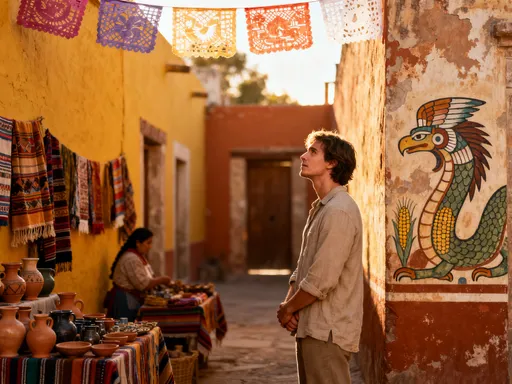
The medina of Sousse unfolds like a puzzle—intentional but not always intuitive. Its narrow alleys twist and turn, opening unexpectedly into small courtyards or shaded plazas where tea is served on low wooden tables. The key to enjoying it fully is not to rush, but to let the place guide you. There’s no need for a map; instead, follow the scents and sounds. The rich aroma of cumin and saffron will lead you to the spice quarter. The chime of metalwork echoes from the alley of coppersmiths. The deep reds and blues of wool rugs drape the entrances to carpet merchants’ shops.
Stalls are grouped by craft, a tradition that dates back to medieval guild systems. Jewelry sellers cluster near the Great Mosque, their displays glittering with Berber silver and amber beads. Potters line the eastern arcades, where airflow helps dry the clay. Leatherworkers occupy cooler, covered corridors, where hides are dyed in natural pigments and stretched to dry. Understanding this layout helps visitors plan their journey—not as a checklist, but as a curated exploration. Start with the outer rings, where lighter goods like scarves and soaps are sold, then move inward toward the more specialized artisans.
Timing matters. Early mornings, just after 9 a.m., offer a peaceful atmosphere, with fewer crowds and cooler temperatures. Vendors are fresh, eager to share stories, and often more willing to engage in conversation. By midday, the medina warms up—both in temperature and energy. This is when the bargaining begins in earnest, and the air fills with laughter and animated exchanges. Late afternoon, around 4 p.m., brings a golden light that softens the stone and makes photography especially rewarding. Avoid Fridays if possible, as many shops close for prayer and family time, though the medina remains open.
For comfort and respect, dress modestly. A light scarf is useful—not only for sun protection but also for covering shoulders when entering more conservative areas. Flat, comfortable shoes are essential; the uneven stones can be tricky. Carry cash in small bills, preferably in Tunisian dinars, as most vendors do not accept cards. Keep money in a secure pouch under clothing, and avoid displaying valuables. While Sousse is generally safe, staying aware without anxiety is part of traveling wisely. Smiling, greeting shopkeepers with a polite “Salam alaikum,” and accepting an offer of mint tea can open doors far more than any currency ever could.
Handmade Treasures You Won’t Find Anywhere Else
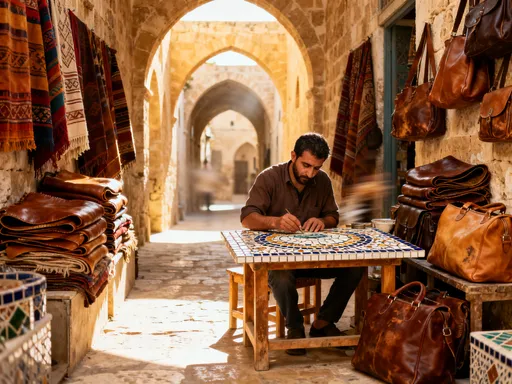
What sets Sousse apart from other Mediterranean destinations is the depth of its handmade crafts—pieces born not in factories, but in homes, workshops, and open-air stalls where artisans work with tools passed down through generations. Among the most striking are the mosaic tables, known locally as zellij. Each is a puzzle of tiny, hand-cut tiles in turquoise, cobalt, and terracotta, arranged in intricate geometric patterns. These are not mass-produced; each table takes weeks to complete, with craftsmen using hammers and chisels to shape every piece by hand. The designs often reflect Islamic art principles, avoiding figurative representation in favor of symmetry and repetition, symbolizing the infinite nature of creation.
Berber silver jewelry is another treasure unique to Tunisia’s cultural landscape. Often crafted in remote villages of the Atlas Mountains and sold in Sousse’s souks, these pieces carry ancient symbols—the hand of Fatima for protection, the triangle for fertility, the dot-in-circle for the eye of wisdom. Many pendants are engraved with Amazigh (Berber) script, a pre-Arab writing system that speaks to North Africa’s deep indigenous roots. Women who wear these pieces today are not just making a fashion statement; they are carrying forward a legacy of resilience and identity.
Wool rugs and kilims, handwoven by women in rural cooperatives, offer both beauty and warmth. Unlike machine-made imports, these textiles use natural dyes from plants like saffron, indigo, and pomegranate peel, giving them a depth of color that changes subtly in different lights. Each rug tells a story through its pattern—some depict migration routes, others celebrate marriage or harvest. Buying one supports not just an artisan but an entire community, often in regions where economic opportunities are limited. These are not just floor coverings; they are heirlooms in the making, meant to be passed down through generations.
What makes these items so meaningful is their soul. They are made slowly, with care, often while the artisan sings or prays. There is no rush, no assembly line. When a woman chooses one of these pieces for her home, she brings more than decoration—she brings intention. She becomes part of a chain of women who have valued craftsmanship, beauty, and meaning over convenience. In a world of fast fashion and disposable goods, these treasures stand as quiet acts of resistance—a reminder that some things are worth waiting for.
The Art of Bargaining: Respectful, Not Risky
In Western shopping culture, fixed prices are the norm, and haggling can feel uncomfortable or even rude. But in Sousse’s souks, bargaining is not just expected—it is a ritual, a dance of respect and rapport. It is not about winning or defeating the seller, but about finding a fair point where both parties feel satisfied. The process begins with a smile, a greeting, and often, an invitation to sit and share a glass of sweet mint tea. This is not a sales tactic; it is genuine hospitality. In Tunisia, guests are honored, and commerce is woven into the fabric of human connection.
Start by asking the price, then pause. Listen. Often, the first quote is higher than what the vendor ultimately expects, not as deception, but as a cultural opening move. Respond with a counteroffer that feels reasonable—perhaps 50 to 60 percent of the initial price—delivered calmly and with a friendly tone. The key is to remain respectful. Laughing at a price or walking away too quickly can be seen as dismissive. Instead, express appreciation: “This is beautiful work. I admire the detail. Could we find a price that works for both of us?”
Watch the vendor’s reaction. If they lower the price slightly and hold firm, they may be near their limit. If they counter with a number closer to your offer, the conversation is progressing. Sometimes, after several rounds, the seller will say, “For you, special price,” and name a figure. This is often the best deal they’re willing to give. Accepting it with gratitude closes the exchange on a positive note. If the gap remains too wide, it’s okay to walk away—politely. Say, “Thank you, I’ll think about it,” and move on. Often, the vendor will call you back with a better offer.
Bargaining is not just about saving money; it’s about building a moment of human exchange. It’s in these conversations that travelers learn the most—about the craft, the family behind it, the challenges of keeping traditions alive. For women who value connection, this interaction can be as valuable as the item purchased. And remember, paying fairly matters. These artisans rely on their work to support their families. A bargain should not come at the cost of someone else’s dignity. When done with kindness, negotiation becomes a bridge, not a battle.
Beyond the Medina: Modern Markets and Coastal Boutiques
While the medina remains the soul of Sousse’s shopping experience, the city also embraces modernity along its coastline. Just a short walk from the ancient walls, the corniche unfolds with breezy boutiques, art galleries, and contemporary craft shops that blend Tunisian heritage with fresh design. Here, young designers reinterpret traditional motifs—reimagining Berber patterns on silk scarves, casting mosaic tiles into modern tableware, or dyeing cotton with natural pigments in minimalist styles. These spaces cater to a new generation of shoppers who value both authenticity and elegance.
Local fashion boutiques offer ready-to-wear kaftans and tunics made from lightweight linen and cotton, perfect for summer wear. Unlike mass-produced versions found in tourist shops, these pieces are tailored with care, often by women-owned businesses. Some stores collaborate directly with rural cooperatives, ensuring fair wages and sustainable practices. Shopping here supports innovation while honoring roots—proof that tradition does not have to mean stagnation.
The contrast between the medina and the corniche is not a divide, but a dialogue. One honors the past; the other imagines the future. Together, they show how Sousse balances preservation with progress. For visitors, this means a richer experience—starting the morning in the spice-scented alleys of the old town, then ending the day sipping orange blossom tea in a seaside boutique, surrounded by art that feels both familiar and new. It’s a reminder that culture is not frozen; it evolves, adapts, and thrives when given space to breathe.
Food as Part of the Shopping Experience
In Sousse, shopping is never just about objects—it’s also about taste. The souks are alive with edible treasures: mounds of golden saffron, jars of green and black olives cured in lemon and garlic, baskets of dates so sweet they melt on the tongue. Spice vendors don’t just sell—they educate. They’ll open a pouch of ras el hanout, a complex blend of over a dozen spices, and invite you to inhale its warmth. Olive oil sellers offer tiny cups for tasting, explaining the difference between early harvest and late harvest oils. Date merchants hand out samples, proud of their family’s harvest from the southern oases.
These moments transform shopping into an act of communion. When a seller shares a taste, they are offering more than flavor—they are sharing pride, memory, and hospitality. For women who cook and care for their families, these ingredients carry special meaning. Bringing home a jar of Tunisian olive oil or a pouch of hand-blended spices is not just about flavor; it’s about recreating a moment, a feeling, at the family table. It’s a way to say, “I was there. I saw, I learned, I brought this back for you.”
Packaging these goods for travel is easy. Spices and dried herbs fit neatly into small tins or vacuum-sealed bags. Olive oil can be purchased in break-resistant containers designed for transport. Dates keep well in cool, dry spaces and make excellent gifts. When unpacked at home, they become more than ingredients—they become conversation starters, memories in edible form. Cooking with them connects the kitchen to a distant shore, a marketplace, a smile shared over a sample of honey-drenched pastry.
Shopping with Purpose: Supporting Local Artisans and Sustainable Tourism
Every purchase in Sousse’s souks carries weight. When travelers choose handmade over mass-produced, they contribute to the survival of crafts that might otherwise fade. Tourism can be a double-edged sword—bringing income but also risk of exploitation and cultural dilution. Yet when done mindfully, it becomes a force for good. Buying directly from artisans, paying fair prices, and asking about the story behind a piece are small acts that add up to real impact.
Look for signs of authenticity. Handmade rugs will have slight imperfections—variations in knotting, natural dye variations—proof of human touch. Silver jewelry stamped with a hallmark or made on-site is more likely to be genuine. Pottery shaped without a wheel, with uneven rims and earthy textures, speaks of traditional methods. Avoid items that feel too perfect, too cheap, or stamped with foreign labels—these are often imports sold as local.
Supporting cooperatives and women-led initiatives has a ripple effect. In rural areas, income from craft sales can fund children’s education, improve housing, and empower women to gain financial independence. By choosing these products, travelers help sustain entire communities. They become part of a quiet movement—one that values people over profit, depth over convenience, and legacy over trend.
Leaving Sousse with a suitcase full of treasures is satisfying, but leaving with understanding is priceless. The souks teach patience, presence, and the beauty of slow creation. They remind us that the best things in life are not found in haste, but in the moments between—between words, between stitches, between sips of tea offered by a stranger who feels, by the end, like a friend.
Shopping in Sousse is not consumption. It is connection. It is memory. It is the quiet joy of carrying home not just objects, but stories—of hands that shaped them, voices that told their tales, and hearts that welcomed you into their world. For women who travel with intention, who seek meaning in every mile, Sousse’s souks are not just a destination. They are a revelation.