You Won’t Believe What Tahiti’s Capital Hides in Plain Sight
When you think of Tahiti, palm-fringed beaches and overwater bungalows probably come to mind. But Papeete? Most travelers fly right past it. I stayed downtown for five days and discovered something unexpected: a city where Polynesian soul meets French flair, visible in every market stall, colonial balcony, and coral-stone church. This isn’t just a transit point—it’s a cultural crossroads hiding in plain sight, and its architecture tells the whole story. Beyond the postcard images of turquoise lagoons lies a capital pulsing with history, resilience, and quiet elegance. To truly understand French Polynesia, one must first understand Papeete—not as a backdrop, but as a living narrative written in wood, iron, and sunlight.
First Impressions: Beyond the Airport Hype
Stepping off the plane at Faa’a International Airport, just a short drive from downtown Papeete, most visitors are already mentally checked into their resort on Bora Bora or Moorea. The city, by contrast, greets you with immediacy. Traffic hums along Avenue du Général de Gaulle, the scent of frangipani mingles with diesel fumes, and the rhythm of daily life unfolds without pause. Vendors arrange baskets of taro and pink pearl necklaces under striped awnings, while church bells ring out across the rooftops. This sensory richness is often mistaken for chaos—but it’s actually cohesion in motion, a city that functions on its own intuitive logic.
Many travelers assume Papeete is merely a functional hub, a place to collect luggage, buy souvenirs, or catch a ferry. That perception, while common, overlooks the capital’s layered identity. Unlike the curated tranquility of island resorts, Papeete does not cater to the fantasy of escape. Instead, it offers authenticity—sometimes raw, always real. Its streets don’t hide behind manicured lawns or private gates; they reveal themselves openly, inviting closer inspection. The truth is, Papeete was never meant to be a showpiece. It evolved organically, shaped by trade, governance, and community, making its charm less about perfection and more about presence.
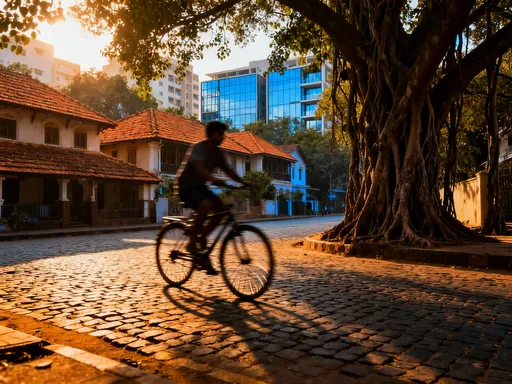
Architecturally, the city presents an immediate contrast. Sleek modern storefronts with mirrored glass stand beside 19th-century wooden buildings with peeling paint and intricate fretwork. Some facades are supported by coral-stone pillars, others by iron columns imported during the colonial era. These juxtapositions aren’t accidental—they reflect decades of adaptation, where new construction respects the footprint of the old. Even where buildings have been renovated, many retain their original proportions, rooflines, and materials, preserving a visual continuity that anchors the city in time.
Yet this subtle harmony is easily missed by those rushing through. Without intention, Papeete can seem unremarkable—especially to travelers accustomed to tropical destinations designed for leisure. But those who slow down begin to notice the details: the way morning light slants across a wrought-iron balcony, the hand-carved tiki figure tucked beside a government office, the rhythm of life unfolding beneath wide eaves designed to shield from tropical downpours. These are not incidental features. They are clues to a deeper story, one that unfolds gradually, like a scroll unfurling in the breeze.
Colonial Echoes: French Influence in Brick and Stone
The architectural language of Papeete is deeply influenced by over 150 years of French presence, beginning in the mid-19th century when Tahiti became a French protectorate. This era left an indelible mark on the city’s urban form, particularly in its public buildings and civic spaces. The French introduced European design principles—symmetry, proportion, and formal planning—while adapting them to the realities of a tropical climate and Pacific geography. The result is a unique fusion: buildings that feel distinctly French in style, yet distinctly Polynesian in function and feel.
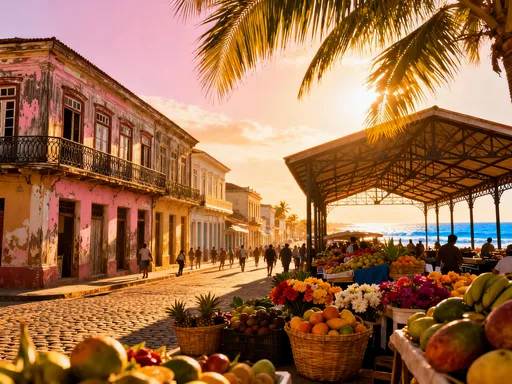
One of the most visible legacies is the pastel palette of government and administrative buildings. Soft yellows, pale blues, and creamy whites dominate the central districts, their colors faded gently by sun and salt air. These structures often feature corrugated metal roofs, steeply pitched to shed rain, and wide verandas supported by slender columns. Wrought-iron railings, imported from France or locally forged, curl into delicate floral patterns along second-floor balconies—a detail that speaks to both craftsmanship and colonial aesthetic preference. These elements were not merely decorative; they served practical purposes, allowing airflow while offering shade and protection from the elements.
A prime example is the former Palace of the Governors, now housing regional administrative offices. Built in the late 1800s, the structure combines neoclassical symmetry with tropical adaptations. Its double-height windows are fitted with louvered shutters, and its raised foundation improves ventilation—a design borrowed from Creole architecture in the Caribbean, another French colonial context. Though no longer a royal residence, the building remains a symbol of authority and continuity, its presence anchoring the city’s central square. Similarly, the Cathedral of Our Lady of the Assumption, constructed in the 1870s, stands as a testament to the enduring influence of French Catholicism. Its coral-stone walls and twin bell towers rise above the surrounding canopy, visible from many points in the city.
What makes these colonial structures remarkable is not their dominance, but their integration. Unlike in some former colonies where European architecture overshadows local forms, Papeete’s colonial buildings coexist with indigenous design traditions. They do not tower over the landscape; instead, they are woven into it. Palm trees grow beside stone walls, market stalls operate in the shadow of government offices, and daily life unfolds around, through, and alongside these historic edifices. This blending reflects a broader cultural synthesis—one where French influence is acknowledged, but not absolute. The city absorbed what was useful and adapted it to its own rhythm, creating a built environment that feels neither foreign nor entirely familiar, but uniquely Tahitian.
Local Identity: Traditional Polynesian Design in Urban Spaces
Beneath the colonial veneer, Papeete pulses with Polynesian identity, expressed most clearly in its use of traditional design principles within modern civic architecture. This revival is not a nostalgic reenactment, but a conscious reclamation of cultural heritage—one that honors ancestral knowledge while meeting contemporary needs. Across the city, public buildings, community centers, and ceremonial spaces incorporate elements rooted in Polynesian building traditions, from material choices to spatial organization.
One of the most distinctive features is the use of natural, locally sourced materials. Coral stone, quarried from ancient reefs, forms the foundation of many structures, offering durability and thermal mass that helps regulate indoor temperatures. Volcanic rock, dark and porous, is used for retaining walls and decorative accents, grounding buildings in the island’s geological history. In more ceremonial contexts, such as the Maison de la Culture or certain marae (traditional sacred sites), roofs are thatched with pandanus leaves, a practice passed down through generations. These materials are not chosen merely for aesthetics; they represent a deep connection to the land and a commitment to sustainability.
Spatial design also reflects traditional values. Many public buildings feature open-air layouts with high ceilings and wide eaves, allowing for natural ventilation and fostering a sense of communal openness. This design philosophy stems from the Polynesian way of life, where social interaction is central and the boundary between indoors and outdoors is fluid. In the city’s cultural centers, for example, meeting spaces often lack walls, relying instead on elevated platforms and shaded roofs to define areas. This encourages gathering, conversation, and collective participation—values that remain vital in Tahitian society.
Equally important are the symbolic elements embedded in the architecture. Carvings of tiki figures, ocean waves, and ancestral motifs appear on beams, lintels, and support posts, serving both decorative and spiritual functions. These patterns are not random; they carry meaning, often referencing genealogy, navigation, or creation myths. In newer civic buildings, such as the Papeete City Hall annex, these motifs are integrated with modern materials like concrete and steel, creating a dialogue between past and present. This synthesis sends a powerful message: that tradition is not static, but evolving—capable of thriving within a modern urban context.
Markets and Daily Life: Where Function Meets Aesthetic
No place in Papeete embodies the fusion of culture, commerce, and architecture more vividly than the Papeete Market, locally known as Le Marché. Open daily, this bustling complex is more than a place to buy fruit or flowers—it is the city’s living room, its kitchen, and its art gallery all at once. Housed in a series of iron-framed pavilions with high, vaulted ceilings, the market was designed for function: to allow air to circulate, to shelter vendors from sun and rain, and to accommodate the flow of hundreds of visitors each day. Yet within this utilitarian framework, beauty emerges organically, in the colors of stacked mangoes, the patterns of woven baskets, and the hand-painted signs above each stall.
The market’s structure dates back to the early 20th century, when French urban planners sought to organize informal trade into a centralized location. The result was a series of long, shed-like halls supported by cast-iron columns and covered with corrugated metal roofs. The high ceilings create a chimney effect, drawing hot air upward and keeping the interior relatively cool. Wide walkways divide the space into zones: one for produce, another for seafood, a third for crafts and souvenirs. This organization reflects both practicality and cultural logic, grouping related items while allowing for social interaction between vendors and customers.
Each stall is a microcosm of personal and cultural identity. Women in floral muumuus arrange pineapples in neat pyramids, their tables shaded by umbrellas made from pandanus leaves. Fishermen display their morning catch—parrotfish, mahi-mahi, and tuna—on beds of ice, their scales catching the light. Nearby, artisans sell black pearl jewelry, monoi oil, and hand-carved tikis, often using reclaimed wood or recycled materials. These displays are not merely commercial; they are expressions of pride, skill, and heritage. Even the way goods are arranged—symmetrically, colorfully, with attention to detail—reveals an aesthetic sensibility deeply rooted in Polynesian values of harmony and respect.
The market is also a social hub, where news is exchanged, families meet, and elders sit on benches sharing stories. On weekends, live music fills the air—ukuleles and guitars accompanying traditional chants. This vibrancy is not incidental; it is enabled by the architecture itself. The open design invites lingering, the shade encourages seating, and the proximity of stalls fosters conversation. In this way, the market does more than serve economic needs—it strengthens community bonds and preserves cultural practices in a rapidly modernizing city.
Religious Landmarks: Spiritual Architecture Across Faiths
Walking through Papeete, one cannot help but notice the diversity of religious architecture, a reflection of the city’s multicultural population. While Christianity is the dominant faith, introduced by missionaries in the 18th century, other traditions have taken root over time, creating a spiritual landscape as varied as its people. Churches, chapels, and temples stand in close proximity, each expressing its beliefs through distinct architectural forms, yet coexisting peacefully in shared neighborhoods.
The most prominent is the Cathedral of Our Lady of the Assumption, a Roman Catholic church built in the Gothic Revival style with coral-stone walls and pointed arches. Its twin spires rise above the city, and its interior is adorned with stained-glass windows depicting biblical scenes with Polynesian faces—a powerful symbol of cultural integration. The cathedral hosts weekly masses and major feast days, drawing congregants from across the island. In contrast, Protestant chapels, such as those belonging to the Maohi Protestant Church, tend to be simpler in design: single-story buildings with wooden frames, tin roofs, and minimal ornamentation. This modesty reflects the denomination’s emphasis on humility and direct worship, yet these chapels are no less central to community life.
Equally significant is the presence of non-Christian places of worship. The Buddhist temple, located in a quiet residential area near the waterfront, is a serene structure with a gently curved roof, wooden eaves, and a small garden of bonsai and frangipani. Though modest in size, it serves a growing community of Chinese-Tahitians and others drawn to its meditative atmosphere. Similarly, a Chinese temple dedicated to Guan Yu, the god of loyalty and righteousness, features upturned eaves, red pillars, and incense burners, reflecting the enduring influence of Chinese immigrants who arrived in the 19th century as laborers and merchants.
What unites these diverse structures is not style, but function. Each serves as a center for spiritual practice, cultural celebration, and community support. During festivals like Chinese New Year or All Saints’ Day, these buildings become focal points of public life, their architecture temporarily transformed by decorations, lanterns, and offerings. Their coexistence speaks to Papeete’s capacity for pluralism—a city where difference is not erased, but honored. In a world often divided by faith, Papeete offers a quiet example of how spiritual architecture can reflect both identity and unity.
Modern Adaptations: How New Buildings Respect Old Roots
As Papeete evolves, new construction faces the challenge of balancing modern needs with cultural and environmental sensitivity. In recent years, architects and urban planners have increasingly embraced designs that respond to the tropical climate while honoring traditional aesthetics. This shift reflects a broader awareness of sustainability, resilience, and cultural authenticity—values that are shaping the city’s future.
One of the most visible trends is the use of passive cooling techniques. Many new buildings feature louvered windows, adjustable shutters, and elevated foundations that allow air to circulate beneath the structure, reducing reliance on air conditioning. Shade structures—wide overhangs, pergolas, and trellises—are integrated into facades, providing protection from the intense equatorial sun. These features are not new; they echo traditional Polynesian design, where airflow and shade were essential for comfort. By reviving and refining these principles, modern architects are creating spaces that are both functional and culturally resonant.
Along the waterfront, several civic and hospitality projects demonstrate this approach. The recently renovated Papeete Yacht Club, for instance, combines concrete construction with open-air lounges and wooden detailing inspired by traditional canoe houses. Similarly, new government buildings incorporate coral-stone accents, carved wood panels, and courtyards that invite natural light and ventilation. These designs do not mimic the past; they reinterpret it, using contemporary materials and techniques to achieve timeless goals: comfort, beauty, and connection to place.
Tourism development, too, is being reimagined. While most visitors still head to luxury resorts on outer islands, there is growing interest in urban ecotourism—experiences that allow travelers to engage with local life in authentic ways. Some boutique hotels in Papeete now offer cultural immersion programs, including market tours, craft workshops, and architecture walks. Their buildings reflect this mission, blending modern amenities with traditional design elements. This shift suggests a future where urban development supports, rather than overshadows, cultural identity.
Walking the City: A Self-Guided Architectural Stroll
To truly appreciate Papeete’s architectural richness, one must walk its streets with intention. A self-guided stroll through downtown offers a curated journey through centuries of design, culture, and daily life. Begin at the waterfront, where the breeze off the lagoon cools the morning air. From here, follow Rue Sauveur, a narrow street lined with colonial-era buildings, their pastel facades glowing in the early light. Pause at the Cathedral of Our Lady of the Assumption, noting how its stone walls absorb and release heat, moderating the microclimate around it.
Continue to the Papeete Market, where the pace quickens and the senses awaken. Spend time observing the iron framework of the pavilions, the way sunlight filters through the high ceilings, and how vendors arrange their goods with care. From there, turn onto Avenue de la Reine Pōmare IV, named after the 19th-century monarch who resisted French annexation. Along this street, you’ll find a mix of civic buildings, small shops, and residential homes with wooden balconies—each telling a piece of the city’s story.
Next, visit the Maison de la Culture, a modern building that pays homage to traditional forms. Notice the open-air theater, the carved wooden panels, and the use of natural materials. If time allows, walk to the Chinese temple or the Buddhist meditation hall, observing how these spaces create pockets of tranquility within the urban fabric. End your tour at Place To’ata, the city’s main square, where locals gather, buses arrive and depart, and the pulse of Papeete beats strongest.
For the best experience, explore in the morning, when temperatures are mild and light is soft. Wear comfortable shoes—some sidewalks are uneven—and carry water. Be respectful when photographing people or sacred spaces; a smile and a nod go far. Most importantly, allow yourself to move slowly. Papeete does not reveal itself in snapshots. Its beauty is cumulative, built from moments of observation, connection, and quiet discovery.
Conclusion
Papeete doesn’t shout its beauty—it whispers. Its architecture isn’t about grand monuments but quiet conversations between cultures, climates, and centuries. By looking closely, travelers gain more than sightseeing; they witness how identity is built, layer by layer, in wood, stone, and spirit. From the coral-stone foundations of colonial churches to the hand-woven baskets in the market, every element tells a story of adaptation, resilience, and pride. The city does not perform for tourists; it lives, breathes, and evolves on its own terms.
Next time you land in Tahiti, skip the rush to the resorts. Stay a few days. Let the capital reveal itself. Wander its streets, talk to its people, savor its rhythms. You might just fall for a city no one told you to love—one that doesn’t need to dazzle to be unforgettable. In Papeete, beauty is not hidden; it is simply waiting to be seen by those willing to look.